A Practical Guide for Salem Oregon First-Time Buyers
April 23, 2026
April 23, 2026
Buying your first home in Salem can feel exciting and overwhelming at the same time. You may be asking yourself whether you should prioritize charm, low maintenance, commute convenience, or monthly affordability. The good news is that Salem gives you several realistic paths to homeownership, and understanding those options can help you choose with more confidence. Here’s how to think through your first home in Salem in a practical, local way.
Before you fall in love with a specific home style or area, start with the full cost of ownership. According to the CFPB homeownership worksheet, your housing budget should account for more than just your mortgage payment.
That means looking at principal and interest, property taxes, insurance, utilities, maintenance, improvements, and any HOA or condo dues. The same worksheet notes that a common rule of thumb is to budget about 1% of a home’s price each year for maintenance and to keep 3 to 6 months of essential expenses in reserve.
Closing costs matter too. Fannie Mae guidance cited in the same worksheet notes that closing costs are often about 2% to 5% of the purchase price. If you plan ahead for those numbers, you’ll be in a much stronger position to choose a home that feels comfortable long after move-in day.
Salem is large enough to offer different home styles and buying experiences. The city describes Salem as a community with both new and well-established neighborhoods, and current local demographics show a population of 180,406, an owner-occupied housing rate of 55.9%, and a median owner-occupied home value of $416,900, according to the City of Salem community profile.
The city’s Housing Production Strategy adds useful context for first-time buyers. In 2022, Salem had 70,335 dwelling units, with about 63% single-family detached and 26% multifamily. That tells you detached homes still make up the largest share of owner-occupied housing, while attached homes and multifamily properties offer other options worth considering.
If you love character and want to be closer to central Salem amenities, an older in-town home may stand out right away. Salem has a well-documented historic core, with more than 150 individually listed historic properties and four National Register Historic Districts, according to the city’s guide to owning historic properties.
Areas tied to Salem’s historic housing stock include Gaiety Hill/Bush’s Pasture Park, known for bungalows built between 1900 and 1915, Court-Chemeketa with homes from the late 1800s and early 1900s, and Grant, where nearly all homes and buildings date from 1900 to 1940. For many first-time buyers, that kind of architecture and established setting can feel special in a way newer homes do not.
Location is often a major advantage. The city notes that the CANDO neighborhood near downtown includes access to the Downtown Historic District, Riverfront Park, the Elsinore Theater, shopping, state offices, Salem Hospital, City Hall, the Capitol, and the Saturday Market. Salem also highlights more than 20 miles of walking, running, and biking trails in Historic Downtown, with West Salem connected to downtown and the Capitol Mall by pedestrian and bicycle bridges.
The tradeoff is upkeep. Older homes can come with more repair needs, and designated historic properties may require historic design review for exterior changes, even though interior changes are not subject to that review. The city also notes that some qualifying homes may be eligible for a Residential Toolbox Grant, tax incentives, or special assessment programs.
Older in-town homes can be a strong fit if you:
If your priority is simplicity, newer subdivisions may make more sense. Salem’s Housing Production Strategy identifies South and West Salem as areas of opportunity, and the city reports that buyers in focus groups valued proximity to work, amenities, services, and daily routines when choosing housing.
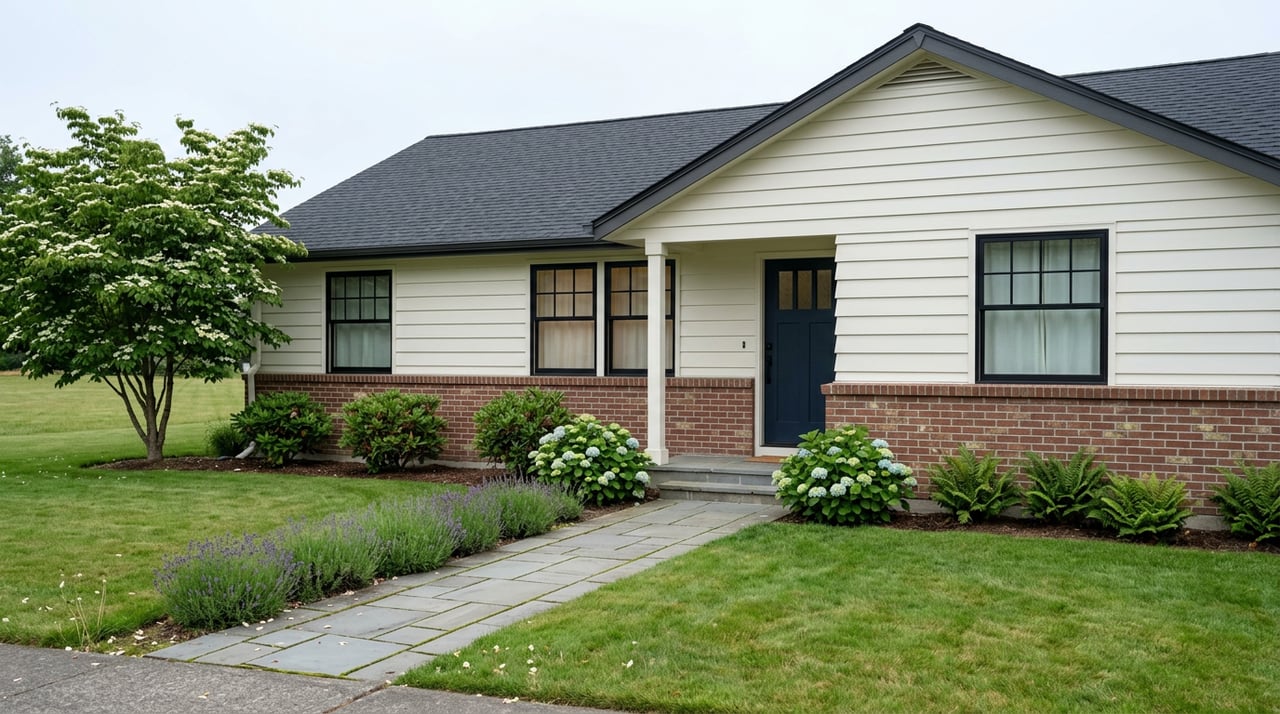
For many first-time buyers, a newer home can feel more predictable. You may have fewer immediate repair issues, a more standardized layout, and less concern about older systems or deferred maintenance.
That said, low maintenance does not automatically mean low cost. You still need to account for the full monthly picture, including utilities, taxes, insurance, and future upkeep. Depending on location, a newer home may also mean relying more on driving for errands, work, or downtown access.
Newer subdivisions often work well if you:
For some first-time buyers, a townhome can offer the best balance between ownership and manageability. Salem’s middle housing FAQ explains that townhouses, triplexes, quadplexes, and cottage clusters are allowed in residential zones that already allow detached single-family homes.
A townhome can mean less exterior maintenance and a more predictable routine. That can be especially appealing if you want to own a home without taking on every outdoor project right away.
The big factor to review is the monthly structure. The Consumer Financial Protection Bureau notes that HOA dues are typically separate from your mortgage payment and can range from a few hundred dollars a month to more than $1,000 a month. Fannie Mae also notes that condo or association fees may cover exterior repairs, common-area maintenance, water, sewer, trash, amenities, and reserves.
Just as important, Fannie Mae recommends reviewing the association’s financial condition, reserve fund, and any possible special assessments before you buy. In other words, with a townhome, the monthly dues and association health matter almost as much as the home itself.
Townhomes may be a smart option if you:
A home that looks great on paper still needs to work for your everyday life. Salem’s mean travel time to work is 22.0 minutes, according to U.S. Census QuickFacts, which makes commute planning an important part of your decision.
Transit may matter more than you expect. Cherriots Local runs seven days a week across Salem-Keizer, and regional routes connect Salem with nearby communities. If you want more flexibility in how you move through the city, access to transit, downtown connections, or bike and pedestrian links can shape how convenient a home feels after you move in.
This is why it helps to think beyond square footage. The right first home is not only about the house itself. It is also about how easily you can get to work, errands, parks, services, and the places you use most often.
Your first home does not have to be your forever home. That is why resale potential should be part of your decision from the beginning.
Salem’s Housing Production Strategy shows that detached homes remain the dominant owner-occupied housing type, which may give them the broadest traditional buyer pool. At the same time, Salem also has a meaningful multifamily share and is supporting middle housing and housing near transit and services.
In practical terms, resale is usually about more than property type alone. A home’s condition, monthly carrying cost, location, and fit with local demand often matter just as much. Salem’s median home sale price also rose from $157,000 in 2012 to $429,000 in 2022, according to the city’s Housing Production Strategy, which is a reminder that choosing carefully now can affect your long-term flexibility later.
If you feel stuck between two home types or areas, come back to a few simple questions:
Those questions can help you cut through the noise and focus on what fits your life, not just what looks best in a listing.
There is no single right first home in Salem. For one buyer, the best fit may be a bungalow with character near central amenities. For another, it may be a newer home with fewer repair concerns or a townhome with a simpler maintenance routine.
What matters most is choosing a home that supports your budget, your daily life, and your comfort level with upkeep. If you want thoughtful guidance as you compare Salem neighborhoods, home styles, and real monthly costs, Jenny Morrow can help you move forward with clarity and confidence.
Stay up to date on the latest real estate trends.

Jenny believes great results begin with understanding each client’s goals. She provides thoughtful guidance and strategic support throughout every step of the process. Clients trust her to deliver an experience that is both smooth and successful.